
Let’s talk about something that doesn’t get enough attention: the 10 warning signs of mold toxicity. Mold is sneaky, it’s stubborn, and it could be lurking in your home without you even realizing it—especially if your HVAC system is giving it the right conditions to thrive.
We know mold isn’t the most fun topic, but stick with us. We’ll walk you through how to spot possible signs of mold toxicity, how your HVAC system can either help or hurt the situation, and why ductless systems are a smart way to keep mold at bay.
First, What Is Mold Toxicity?
Mold toxicity is what happens when your body has a reaction to mold exposure—particularly to the mycotoxins certain molds can produce. Everyone reacts a little differently, but the symptoms can be surprisingly common and easy to overlook.
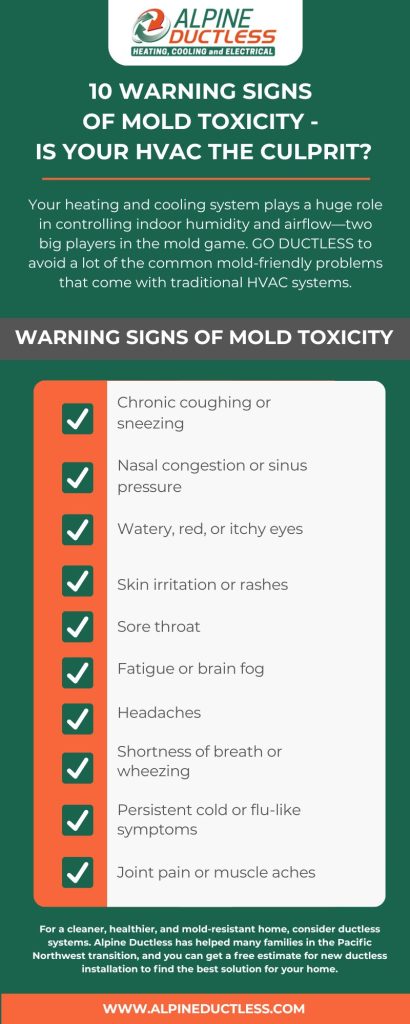
10 Warning Signs of Mold Toxicity
Here are ten symptoms that might signal mold is affecting your health. And hey, we’re not doctors—but if these sound familiar, it could be worth taking a closer look at your home environment (and maybe giving your HVAC system some side-eye).
- Chronic coughing or sneezing – If it feels like allergy season all year long, mold could be part of the problem.
- Nasal congestion or sinus pressure – Mold exposure can irritate your nasal passages, causing stuffiness and pressure that just won’t quit.
- Watery, red, or itchy eyes – Your eyes might be reacting to airborne mold spores in your space.
- Skin irritation or rashes – Some people develop unexplained skin issues when exposed to mold, especially in humid environments.
- Sore throat – Breathing in mold spores can cause throat irritation that lingers longer than your average cold.
- Fatigue or brain fog – If you’re feeling tired or mentally sluggish, mold exposure could be playing a role.
- Headaches – Mold-related headaches tend to pop up more often when you’re at home or in a specific room.
- Shortness of breath or wheezing – Breathing problems are a big red flag, especially for those with asthma or respiratory issues.
- Persistent cold or flu-like symptoms – Mold exposure can mimic a never-ending cold.
- Joint pain or muscle aches – Some people report aching joints or muscles without any other obvious cause.
(Source: Mayo Clinic)
How HVAC Systems Can Make Mold Worse (or Better)
Now let’s shift gears a bit and talk about your HVAC system. Your heating and cooling system plays a huge role in controlling indoor humidity and airflow—two big players in the mold game.
Traditional HVAC Systems
If you’ve got a traditional forced-air system with ductwork, you could be dealing with:
- Hidden moisture – Mold loves damp, dark places. If your ducts have any leaks or condensation, you might have mold growing where you can’t even see it.
- Dust and debris – Over time, your ductwork collects all kinds of dust, which can feed mold spores and help them spread.
- Uneven airflow – If certain rooms don’t get good airflow, they’re more likely to become humid, which gives mold a better chance to grow.
Why Ductless Systems Are a Mold-Free Win
Here’s where ductless systems really shine. Since they don’t rely on long stretches of ductwork, they avoid a lot of the common mold-friendly problems traditional systems have.
- No ducts = fewer hiding spots – Without ductwork, there’s nowhere for mold to hang out and multiply behind the scenes.
- Better humidity control – Many ductless systems come with built-in features that help control indoor humidity, which is key to keeping mold in check.
- Room-by-room comfort – Ductless mini-splits allow you to manage the temperature and moisture in each zone of your home. That means you’re less likely to have a damp, mold-prone corner.
- Easy maintenance – It’s a lot simpler to clean and maintain a ductless system, and you’re less likely to deal with mystery mold in out-of-sight places.
Tips to Prevent Mold, No Matter What System You Use
Even if you’re not ready to switch to a ductless system just yet, here are a few things you can do to keep mold in check:
- Keep humidity levels between 30–50% – Use a hygrometer to monitor and a dehumidifier if needed.
- Clean or replace filters regularly – Dirty filters can trap moisture and mold spores.
- Fix leaks fast – Whether it’s a leaky pipe or a drip from your HVAC, moisture is mold’s best friend.
- Schedule regular maintenance – A quick check-up can catch small issues before they turn into big, moldy problems.
Thinking About Going Ductless?
If the idea of a cleaner, healthier, and more mold-resistant home sounds good to you, it might be time to consider going ductless. We’ve helped a lot of families here in the Pacific Northwest breathe easier—and stay comfortable—by making the switch.Get a free estimate for a new ductless installation with Alpine Ductless. We’d love to help you find the best solution for your home and your health.